Janmashtami 2026 in Greater Noida: bhog, prasad & mithai guide
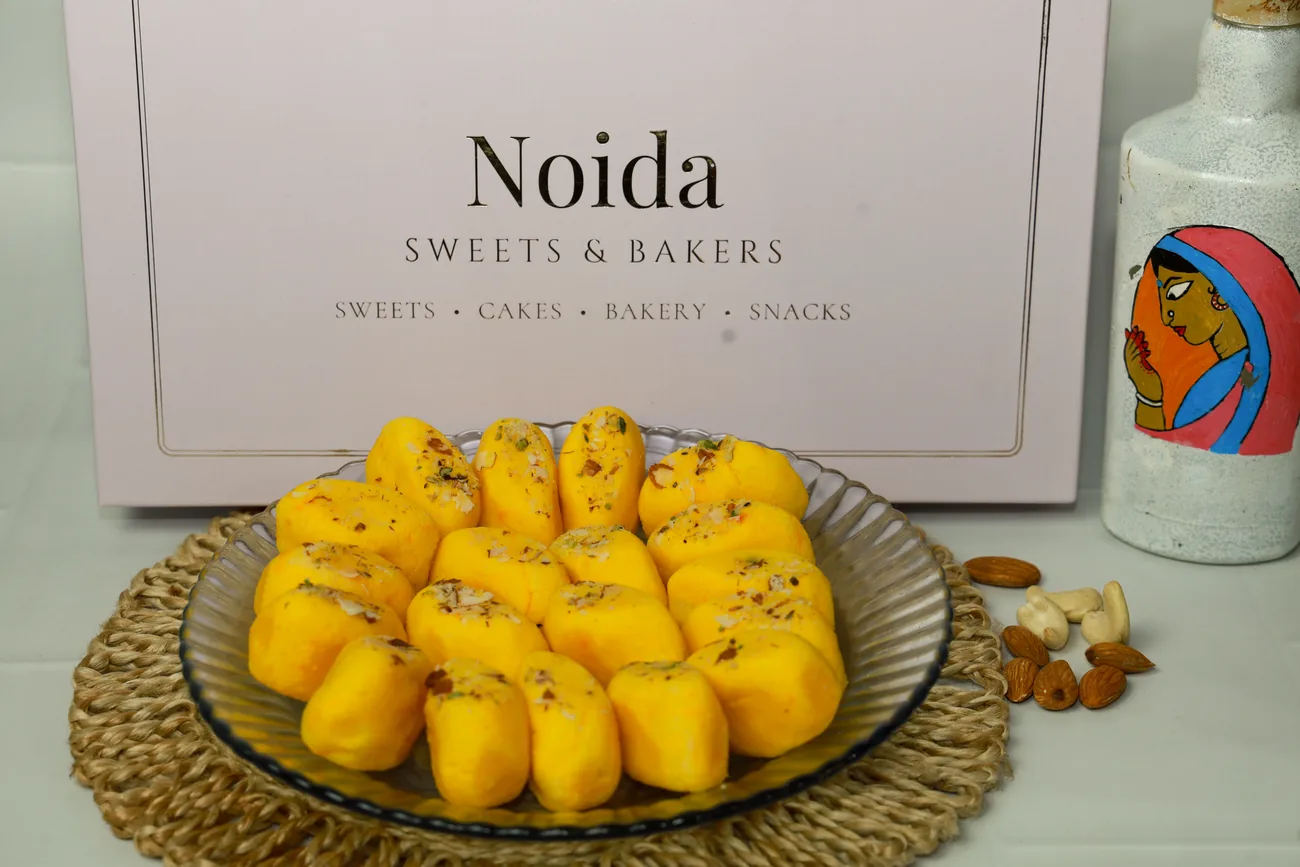
Krishna Janmashtami 2026 falls on Friday, 4 September for most households — ISKCON and Vaishnava temples observe it on Saturday, 5 September — with the midnight Nishita puja from 11:57 PM to 12:43 AM. Here’s the Greater Noida West guide to the bhog thali, the prasad, the peda, and getting it all home fresh for the makhan-chor’s birthday.
Janmashtami 2026: 4 or 5 September?
Both, honestly — and here’s why. Krishna was born at midnight on Bhadrapada Krishna Ashtami under the Rohini nakshatra, and the two calendars read that moment slightly differently. The Smarta tradition (most North Indian households) celebrates on Friday, 4 September 2026, with the Nishita puja window at 11:57 PM–12:43 AM. ISKCON and Vaishnava temples — including the big NCR temples — observe Saturday, 5 September. Dahi Handi follows on Saturday, 5 September.
Planning translation: prasad and sweets should reach home by the evening of 4 September (or the 5th morning for Vaishnava households). Our counters at Supertech EcoVillage-1 are open 8 AM–11 PM on both days.
Why milk sweets rule Krishna’s day
The birthday boy is the makhan-chor — the butter thief — so milk is the language of this festival. Khoya and chhena sweets take the bhog thali’s centre, and every one below is made fresh in our own kitchen (100% vegetarian, FSSAI-licensed):
- Kesar Peda — ₹600/kg — saffron-pressed, the classic janmashtami offering
- Safed Peda — ₹600/kg — the plain khoya purist’s choice
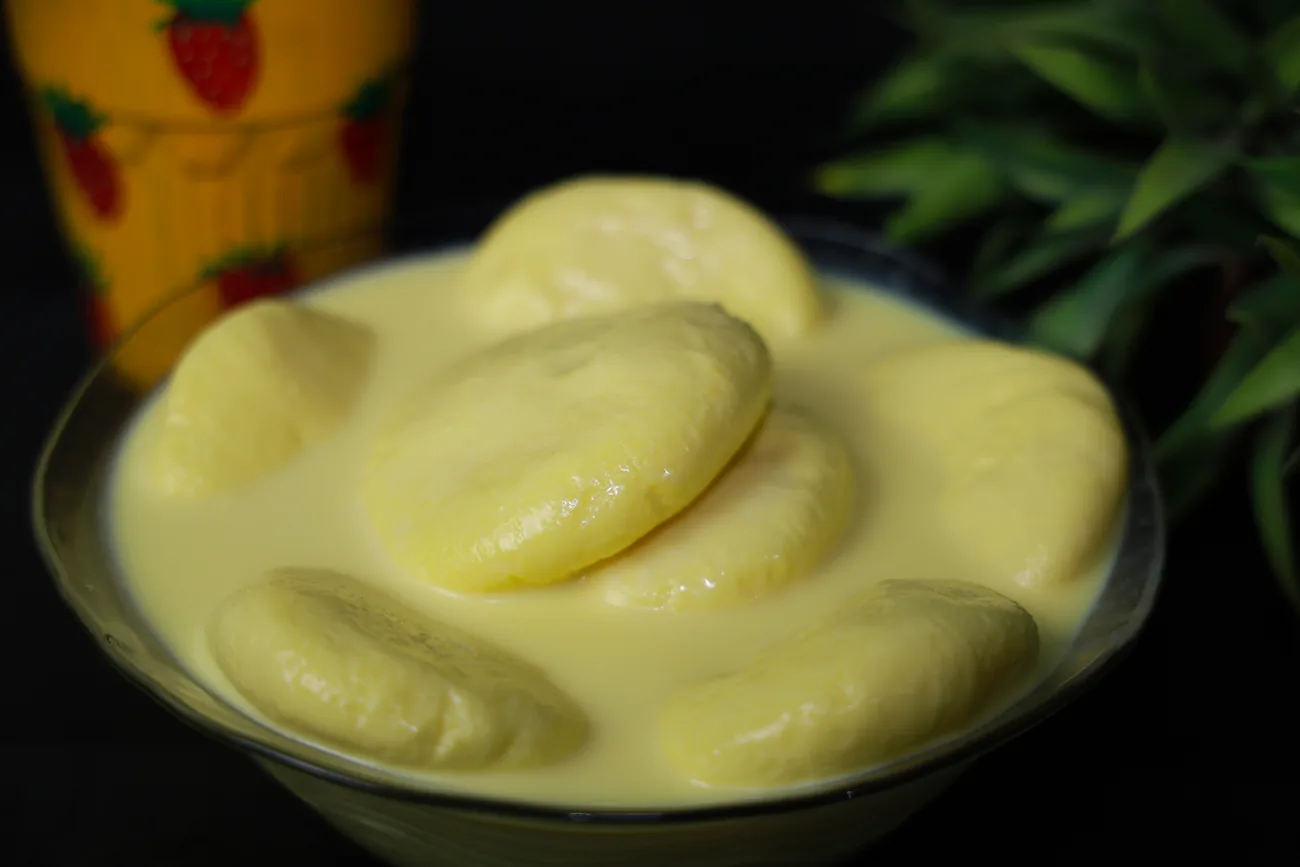
- Rasmalai — ₹50/pc — chilled saffron milk discs for the family table
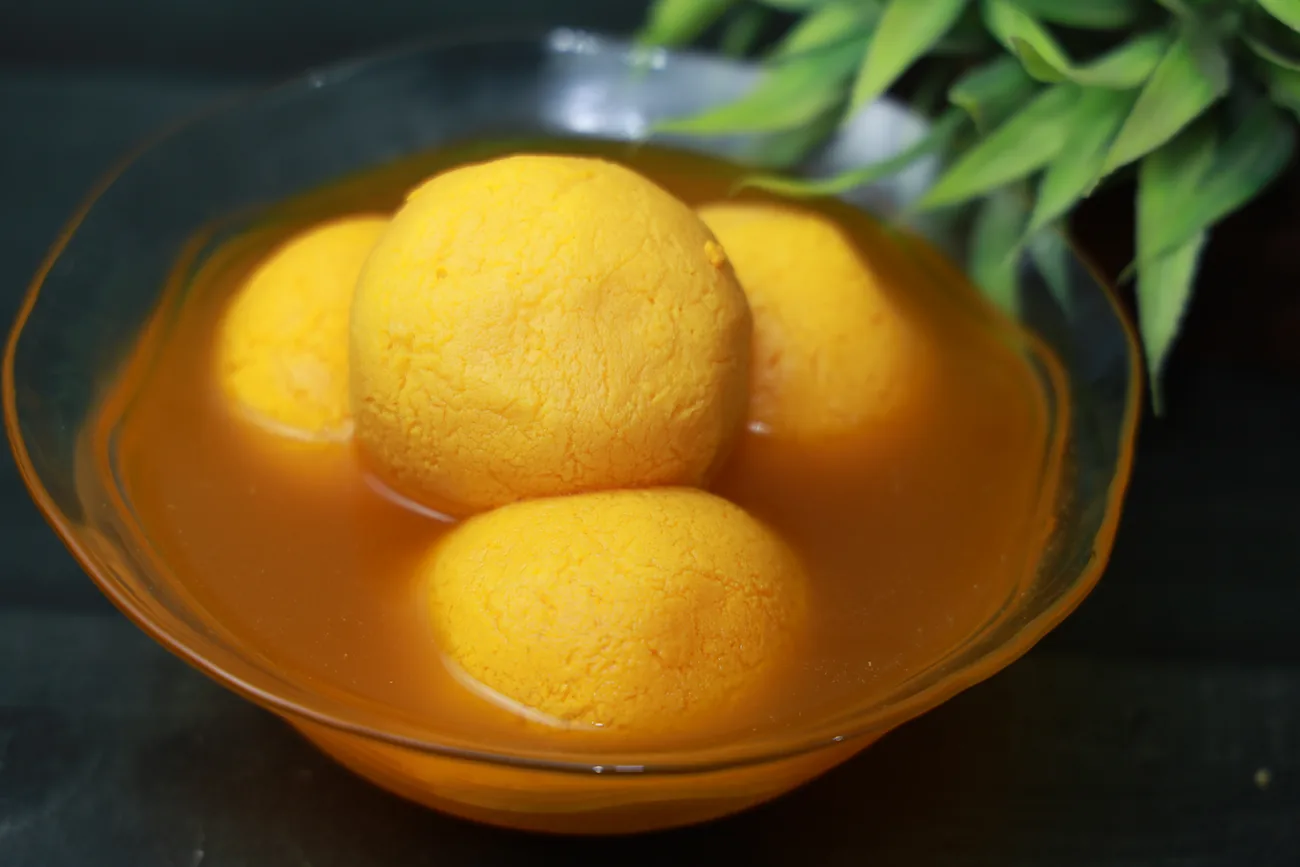
- Rajbhog — ₹40/pc — kesar-stuffed chhena, festive by name itself
- Kalakand — ₹620/kg — grainy, milky, melt-soft
- Milk Cake — ₹620/kg — caramelised milk squares
- Malai Barfi — ₹650/kg — the premium cream barfi
Every price is straight off our live menu — what you see is what you pay at the counter.
The traditional bhog thali, explained
If it’s your first time setting the midnight thali, here’s what each item means:
- Makhan-Mishri — fresh white butter with rock sugar: Kanha’s first love and the one non-negotiable bhog. We make it fresh for Janmashtami orders — book a day ahead.
- Dhaniya Panjiri — roasted coriander-seed powder in ghee with makhana and dry fruits; the vrat-friendly prasad most North Indian homes distribute after the midnight aarti. Made to order for the festival week.
- Panchamrit — the five-nectar mix of milk, curd, ghee, honey and sugar for the abhishek.
- Phal, tulsi & peda — fruit, the sacred leaf, and a khoya sweet to complete the plate.
What is chhappan bhog?
Chhappan bhog is an offering of 56 dishes made to Lord Krishna — one for each meal he is said to have missed during the seven days he held up Govardhan hill. Temples do the full spread; homes recreate a mini version with 5, 11 or 21 items. If your family is attempting one this year, tell us the count on WhatsApp and we’ll help you build the mithai side of the 56.
Fasting notes, honestly
Many devotees keep a phalahar vrat till the midnight puja — and what counts as vrat-friendly genuinely differs from family to family. Milk sweets and fruit are the common ground; some homes take panjiri through the fast, others save it for after. Our honest suggestion: tell us your family’s rules at the counter or on WhatsApp, and we’ll point you to what’s freshest that morning that fits them.
Prasad boxes for pandals, kirtans & societies
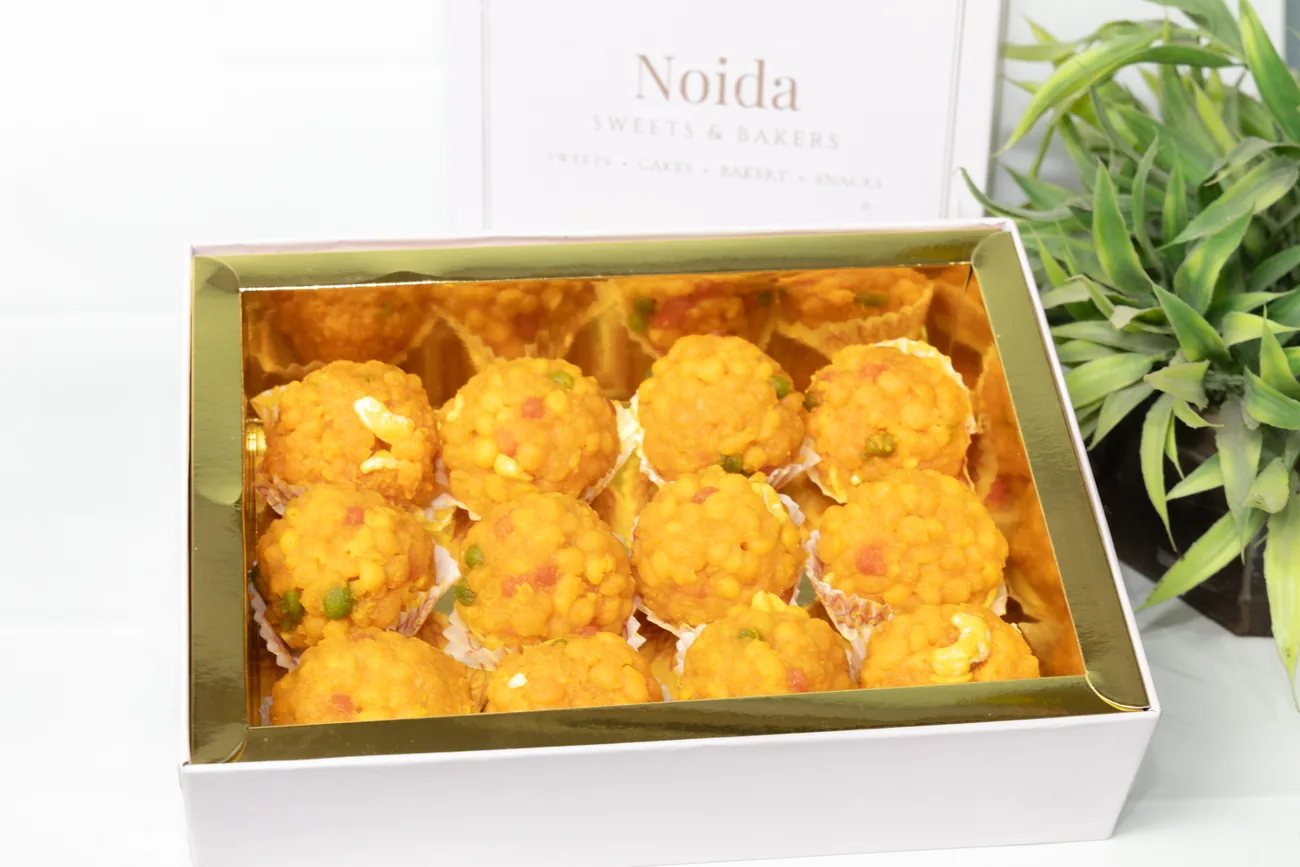
Janmashtami in Greater Noida West is a society festival — pandals in the clubhouse, jhanki competitions, kids dressed as Kanha and Radha, kirtan till late. Committees across Gaur City, Ace City and the EcoVillages order boxed prasad (peda, laddoo or mixed mithai) for distribution after the aarti. A kilo of peda gives roughly 35–40 pieces; send your headcount through the bulk enquiry form or see catering & events — quotes come back the same day. Book by 2–3 September for guaranteed slots.
Dahi Handi, 5 September: the fun half
The morning after the midnight puja, societies string up the matki and the govinda pyramids go up. When the handi breaks and everyone’s drenched in dahi, the evening belongs to the family table — our live chaat counter (3:30–10:30 PM) does golgappe, aloo tikki chaat and dahi bhalla, and party platters of samosas and kachoris travel well to the clubhouse.
A Krishna-theme cake for the little Kanhaiyas
School fancy-dress as Krishna? Society jhanki with the kids? A matki, flute or peacock-feather theme cream cake steals the evening — eggless, any size, and delivered in as little as 4–8 hours (complex designs may take longer, told upfront). Every photo on the Dream Cakes gallery is a cake we actually delivered in these societies — send a reference on the cake order page and we’ll take it from there.
Plan your Janmashtami in 3 lines
- By 2–3 Sep: book makhan-mishri, panjiri and prasad boxes (festival-week specials are made to order).
- 4 Sep: pickups from 8 AM; thali set by evening; Nishita puja 11:57 PM — happy birthday, Kanha. 🌟
- 5 Sep: ISKCON-tradition households celebrate today; Dahi Handi in the societies — we’re open 8 AM–11 PM both days.
Nand ke anand bhayo — Jai Kanhaiya Lal ki! From all of us at Noida Sweets & Bakers. 🦊
Janmashtami 2026 — frequently asked questions
Is Janmashtami 2026 on 4 or 5 September?
Most households (Smarta tradition) celebrate Krishna Janmashtami on Friday, 4 September 2026. ISKCON and Vaishnava temples observe it on Saturday, 5 September. Both mark Krishna’s midnight birth — pick your family’s tradition; we’re open 8 AM–11 PM on both days.
What time is the Janmashtami puja in 2026?
The Nishita (midnight) puja muhurat runs from about 11:57 PM on 4 September to 12:43 AM on 5 September for Delhi-NCR — the symbolic moment of Krishna’s birth.
When is Dahi Handi in 2026?
Dahi Handi is on Saturday, 5 September 2026 — the day after the main Janmashtami puja — when societies hold matki-breaking and govinda events.
Which sweets are offered to Lord Krishna on Janmashtami?
Makhan-mishri first, then milk sweets — peda, rasmalai, rajbhog, kalakand — plus dhaniya panjiri and panchamrit. Krishna’s love for makhan makes milk and khoya sweets the heart of the bhog.
What is dhaniya panjiri?
A vrat-friendly prasad of roasted coriander-seed powder tossed in ghee with makhana, dry fruits and sugar — North India’s classic Janmashtami offering. We make it fresh to order for Janmashtami week; book a day or two ahead.
What is makhan mishri?
Fresh white butter paired with mishri (rock sugar) — the simplest and most beloved bhog for the makhan-chor. Made fresh for Janmashtami orders — WhatsApp us by 2–3 September.
What is chhappan bhog?
An offering of 56 food items presented to Lord Krishna, recalling the 56 meals he missed while lifting Govardhan for seven days. Most homes recreate a mini version — 5, 11 or 21 items — and we help build the mithai side of it.
What is the price of peda for Janmashtami?
Kesar peda ₹600/kg and safed peda ₹600/kg at Noida Sweets & Bakers, made fresh in our own kitchen at Supertech EcoVillage-1. Rasmalai is ₹50/pc and rajbhog ₹40/pc.
Do you make prasad boxes for society pandals and kirtans?
Yes — boxed prasad (peda, laddoo, mixed mithai) for pandals, jhankis and kirtans across Gaur City, Ace City, Supertech EcoVillage and nearby societies. Share headcount by 2–3 September for guaranteed slots.
Can I get a Krishna-theme cake on Janmashtami itself?
Yes — eggless matki, flute and peacock-feather theme cream cakes are delivered in as little as 4–8 hours (complex designs may take longer, told upfront).